Guide to Magic Mushroom
Beginners Guide to Healing Mushrooms
Jul
A Beginner’s Guide to Healing Mushrooms
For thousands of years, cultures across Asia, Europe, and North America have turned to mushrooms not just as food, but as medicine. Today, that ancient wisdom is getting a modern spotlight — reishi lattes, lion’s mane coffee, and chaga tea are showing up everywhere from wellness cafes to grocery store shelves. But what’s actually behind the hype, and how do you get started?
This guide covers the basics: what medicinal mushrooms are, the most popular varieties, how to use them, and what to keep in mind before adding them to your routine.
Note: “Healing mushrooms” here refers to functional/medicinal mushrooms like reishi and lion’s mane — not psilocybin or other psychoactive species, which are legally restricted in most places and belong in a very different conversation.
What Are Medicinal Mushrooms?
Medicinal mushrooms are fungi that have been used traditionally — especially in Traditional Chinese Medicine and Japanese Kampo medicine — for their potential health-supporting properties. Unlike culinary mushrooms (think button or portobello), these are typically consumed for their compounds rather than their taste, often in the form of extracts, powders, tinctures, or capsules.
Modern research is still catching up to traditional use, but many of these mushrooms contain beta-glucans (compounds that may support immune function), antioxidants, and other bioactive substances that have drawn scientific interest.
The Most Popular Varieties to Know
Reishi (Ganoderma lucidum)
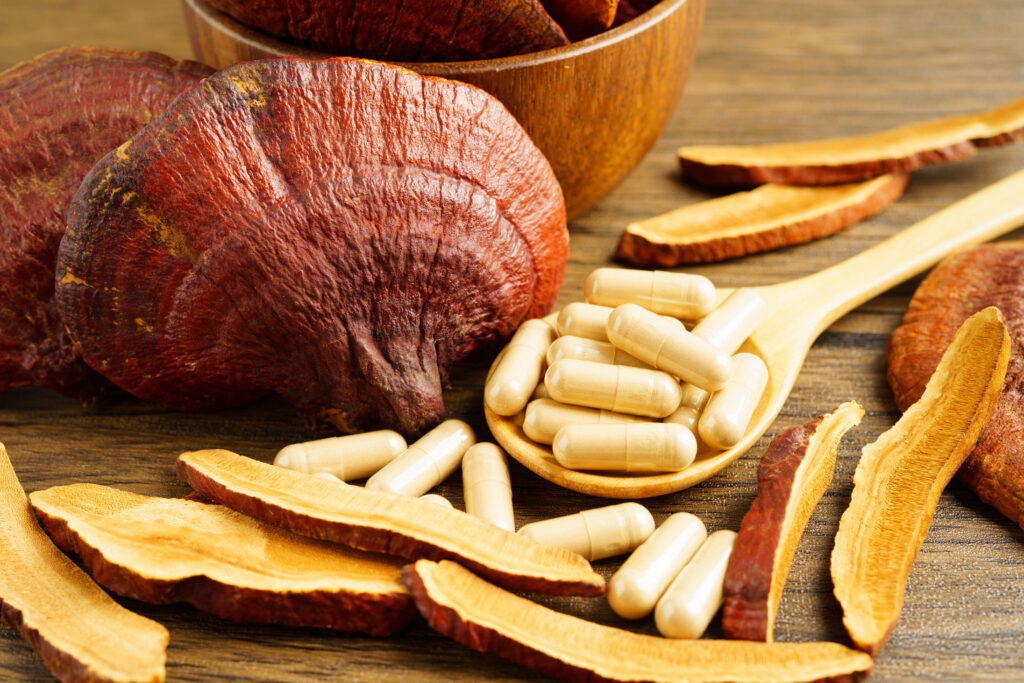
Known as the “mushroom of immortality” in Chinese tradition, reishi has a bitter, woody taste and is most often taken as a tea, tincture, or capsule. It’s commonly associated with relaxation, immune support, and sleep.
Lion’s Mane (Hericium erinaceus)
Easy to recognize by its shaggy, white appearance, lion’s mane is popular for cognitive support and focus. It’s one of the few medicinal mushrooms that’s also genuinely delicious — it has a texture similar to crab or lobster and can be cooked like a culinary mushroom.
Chaga (Inonotus obliquus)
Chaga grows on birch trees and looks more like a chunk of burnt charcoal than a typical mushroom. It’s usually brewed as a tea and is prized for its high antioxidant content.
Cordyceps (Cordyceps militaris or sinensis)
Traditionally used to support energy and stamina, cordyceps has become popular among athletes. It’s most commonly found in powder or capsule form.
Turkey Tail (Trametes versicolor)
Named for its colorful, fan-shaped appearance, turkey tail is one of the most studied medicinal mushrooms, particularly for immune support. It’s usually taken as an extract.
How to Get Started
- Start with one mushroom at a time. This makes it easier to notice how your body responds before combining varieties.
- Choose your form. Powders can be blended into coffee or smoothies, tinctures are quick and portable, and capsules are the most straightforward if you don’t like the taste.
- Look for dual-extraction products. Many beneficial compounds in mushrooms are only released through hot water extraction, while others require alcohol extraction. Products labeled “dual-extract” capture both.
- Check for third-party testing. The supplement industry isn’t tightly regulated, so look for brands that test for potency and contaminants.
- Be patient. Unlike caffeine, most people don’t feel an immediate effect. Traditional use often involves taking these mushrooms consistently over weeks or months.
A Few Things to Keep in Mind
- They’re not a cure-all. Medicinal mushrooms are best thought of as a complement to a healthy lifestyle, not a replacement for medical treatment.
- Quality varies widely. Because the market is largely unregulated, sourcing matters — look for reputable brands that specify the mushroom species and extraction method.
- Check with a doctor first, especially if you’re pregnant, on medication (particularly blood thinners or immunosuppressants), or have an existing health condition, since some mushrooms can interact with medications or affect blood clotting.
- Allergies are possible. As with any new food or supplement, start with a small amount to see how you tolerate it.
Final Thoughts
Medicinal mushrooms offer an interesting bridge between ancient tradition and modern wellness trends. Whether you’re curious about reishi’s calming reputation or lion’s mane’s brain-boosting buzz, the best approach is to start slow, choose quality sources, and pay attention to how your body responds. As always, this is general information rather than medical advice — a conversation with a healthcare provider is the best next step if you’re considering adding these to your routine in a meaningful way.
