The Beginner’s Guide to Functional Mushrooms in Canada Walk into almost any health food store, café, or grocery chain in Canada today and you’ll likely spot something new sitting alongside the vitamins and herbal teas: mushroom coffee, mushroom gummies, mushroom tinctures, even mushroom-infused chocolate bars. What was once a niche interest for foragers and traditional […]
Category Archives: Guide to Magic Mushroom
Guide to Magic Mushrooms
What they are
Magic mushrooms are fungi containing psilocybin, a naturally occurring compound that the body converts into psilocin. Psilocin acts on serotonin receptors in the brain, producing the altered perception, mood shifts, and hallucinations associated with a psychedelic experience. Common species include Psilocybe cubensis, though psilocybin occurs naturally in over 200 mushroom species worldwide.
A brief history
Psilocybin mushrooms have been used in Indigenous Mesoamerican spiritual and healing practices for centuries, most notably among Mazatec communities in Mexico. They entered Western popular culture in the 1950s–60s after being documented by researchers and writers, which eventually led to their criminalization in most countries during the broader crackdown on psychedelics.
Legal status
This varies significantly and shifts often:
- Illegal at the federal level in most countries, including the US (Schedule I) and most of Europe.
- Decriminalized (not legal, but low enforcement priority) in some US cities (e.g., Denver, Oakland) and the state of Oregon and Colorado, which have also legalized supervised therapeutic use.
- Legal or unregulated in a few places, such as the Netherlands (where “truffles,” a related fungal product, are sold legally) and Brazil.
- Laws change frequently, so local, current regulations should always be checked before assuming legality anywhere.
Effects
Effects generally include altered visual perception, changes in thought patterns, emotional shifts (which can range from euphoric to distressing), and a sense of altered time perception. Effects vary widely based on the individual, setting, and mindset — often described using the “set and setting” framework from psychedelic research.
Risks
- Psychological risk is the primary concern — a “bad trip” can involve intense anxiety, paranoia, or disorientation, and mushrooms can trigger or worsen underlying mental health conditions, particularly in people with a personal or family history of psychosis.
- Physical toxicity is low compared to many other drugs, but risks include accidental poisoning from misidentified wild mushrooms (some toxic species closely resemble psilocybin mushrooms) and dangerous interactions with certain medications, including some antidepressants (SSRIs/MAOIs) and lithium.
- Overdose deaths are rare, but injury from impaired judgment during the experience (e.g., accidents) is a real risk.
Current research
Clinical trials at institutions like Johns Hopkins and Imperial College London are studying psilocybin-assisted therapy for treatment-resistant depression, anxiety in terminal illness patients, and addiction — with promising early results, though it remains investigational and is not an approved treatment in most places.
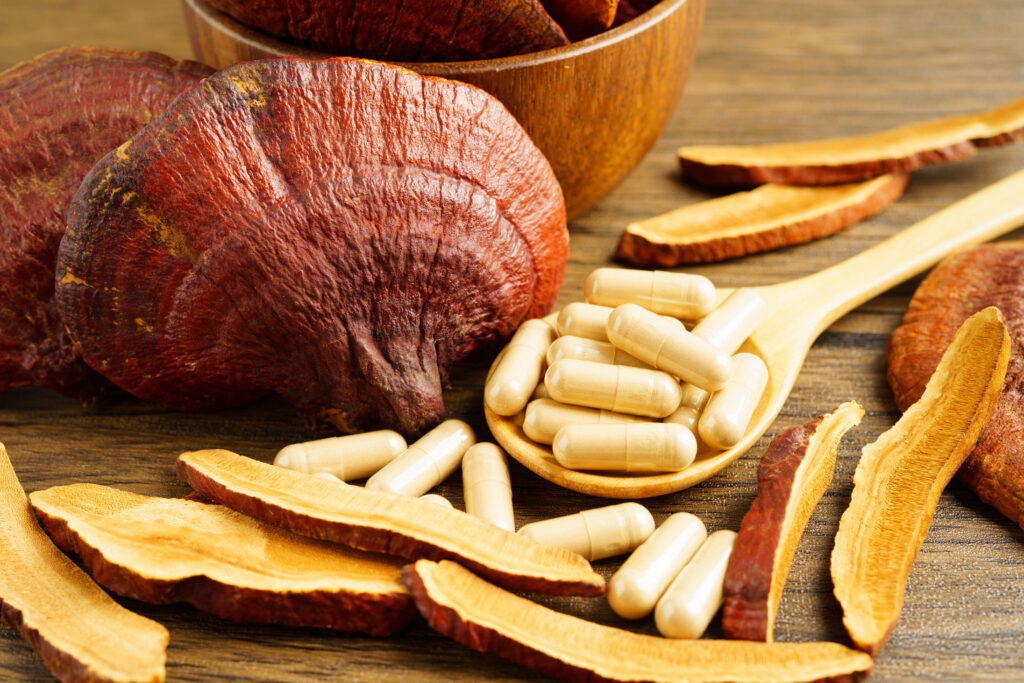
A Beginner’s Guide to Healing Mushrooms For thousands of years, cultures across Asia, Europe, and North America have turned to mushrooms not just as food, but as medicine. Today, that ancient wisdom is getting a modern spotlight — reishi lattes, lion’s mane coffee, and chaga tea are showing up everywhere from wellness cafes to grocery […]


